Table Of Content

American Gothic literature dramatizes a culture plagued by poverty and slavery through characters afflicted with various forms of insanity and melancholy. Poe, America’s foremost southern writer before William Faulkner, generated a Gothic ethos from his own experiences in Virginia and other slaveholding territories, and the black and white imagery in his stories reflects a growing national anxiety over the issue of slavery. An interpretation which has more potential, then, is the idea that the ‘house of Usher’ is a symbol of the mind, and it is this analysis which has probably found the most favour with critics. The narrator quickly closes the window and tells Usher that it is merely an electrical phenomenon or gases expelled from the tarn.
'the Fall of the House of Usher' Details, Poe References, and Easter Eggs - Business Insider
'the Fall of the House of Usher' Details, Poe References, and Easter Eggs.
Posted: Tue, 17 Oct 2023 07:00:00 GMT [source]
In film and television
When his work was critically evaluated, it was condemned for its tendencies toward Romanticism. The writers and critics of Poe’s day rejected many of that movement’s core tenets, including its emphasis on the emotions and the experience of the sublime. Accordingly, commentaries on social injustice, morality, and utilitarianism proliferated in the mid-19th century. Poe conceived of his writing as a response to the literary conventions of this period.
'The Fall of the House of Usher' Release Date, Trailer, Plot, News - Netflix Tudum
Roderick and Madeline are twins and the two share an incommunicable connection that critics conclude may be either incestuous or metaphysical,[7] as two individuals in an extra-sensory relationship embodying a single entity. To that end, Roderick's deteriorating condition speeds his own torment and eventual death. During one sleepless night, the narrator reads aloud to Usher as eerie sounds are heard throughout the mansion.
‘How Disney Built America’: Unpacking the Magic of Every Episode in History Docuseries
Over the next week, both Roderick and the narrator find themselves increasingly agitated. Most of the episode titles are pretty cut and dry, with each giving the viewer a hint at what’s about to transpire. You see, instead of just adapting The Fall of the House of Usher, Flanagan and company used the titular story as a wraparound for what ultimately ended up being 8 adaptations in total. Each individual episode is a play on either a poem or a short story of Poe’s. Perhaps the cleverest bit here is that the story begins and ends with “The Raven,” but in different ways.
Episode 8, "The Raven"
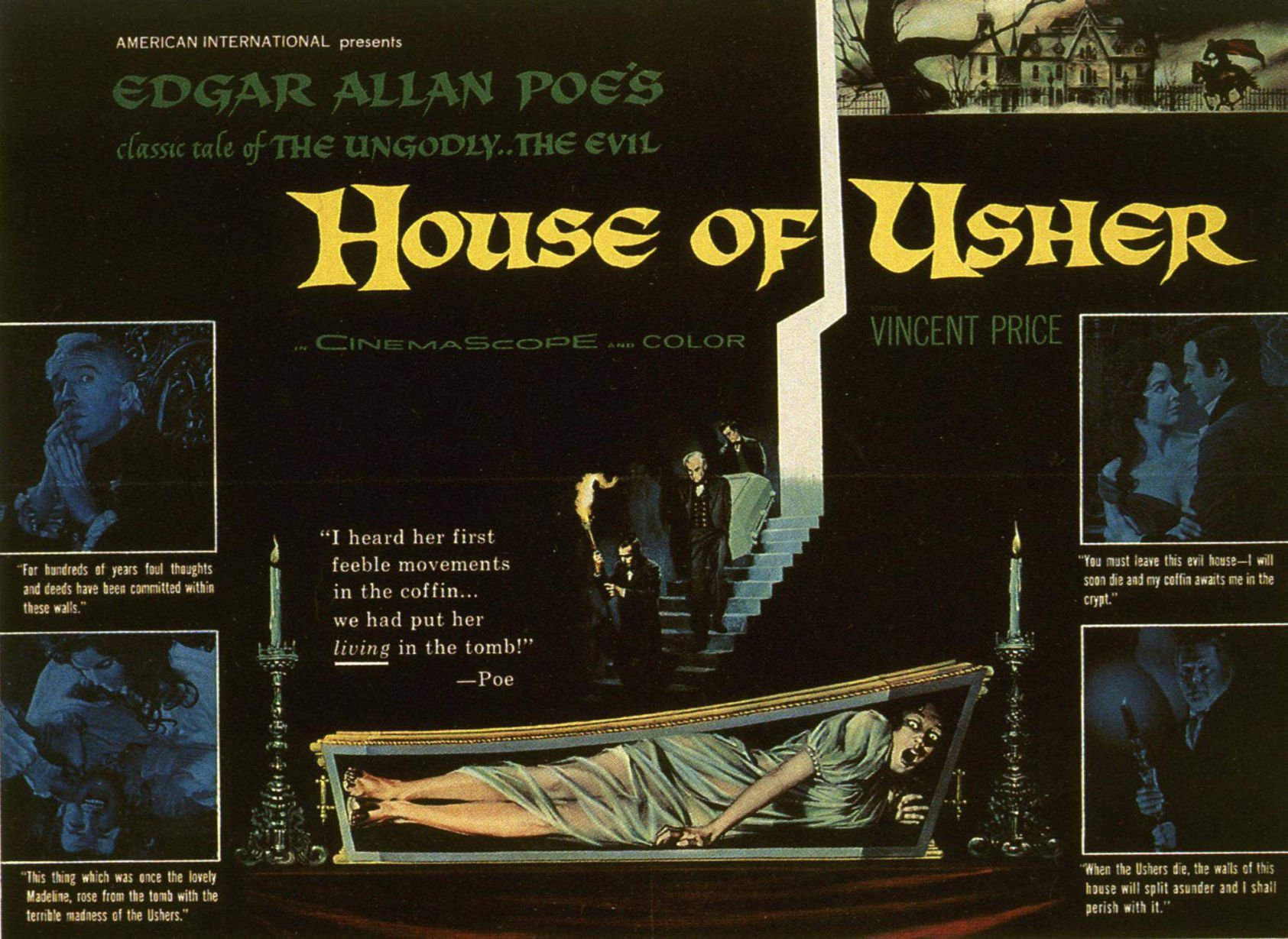
In Lawrence's reading this misogynistic action brings on the revenge of the female, as Madeline returns from the crypt just long enough to bring her errant brother and the house itself to their rightful end. ‘The Fall of the House of Usher’ is probably Edgar Allan Poe’s most famous story, and in many ways it is a quintessential Gothic horror story. We have a mysterious secret afflicting the house and eating away at its owner, the Gothic ‘castle’ (here, refigured as a mansion), premature burial (about which Poe wrote a whole other story), the mad owner of the house, and numerous other trappings of the Gothic novel. Poe condenses these into a short story and plays around with them, locating new psychological depths within these features.
He paints a dark underground tunnel with beams ofstrange light shining through. Usher writes songs on his guitar, and thenarrator recounts one entitled “The Haunted Palace.” In the song a prosperouspalace falls, and only dancing ghosts remain. Roderick admits he believes theUsher house is sentient and that a foul atmosphere grows from the grounds. Hestates that the house has moulded generations of the Usher family and hascaused his current state. Roderick decides to keep his sister preserved in ahouse vault before moving her to the isolated family cemetery. He soon abandonshis former hobbies, and the narrator observes that Roderick is beginning tolose his mind.
We learn, too, that his twin sister, Madeline, a neurasthenic woman like her brother, is subject to catatonic trances. The suspense continues to climb as we go deeper into the dark house and, with the narrator, attempt to fathom Roderick’s malady. Might we then interpret Roderick as a symbol of the conscious mind – struggling to conceal some dark ‘secret’ and make himself presentable to his friend, the narrator – and Madeline as a symbol of the unconscious? Note how Madeline is barely seen for much of the story, and the second time she appears she is literally buried (repressed?) within the vault. When Poe began writing short stories, the short story was not generally regarded as serious literature.
Poe implies incestuous relations sustained the genetic line and that Roderick and Madeline are the products of extensive intermarriage within the Usher family. The Fall of the House of Usher, supernatural horror story by Edgar Allan Poe, published in Burton’s Gentleman’s Magazine in 1839 and issued in Poe’s Tales of the Grotesque and Arabesque (1840). When the narrator arrives, he notes the decrepit, evil atmosphere of the stately house and the nearby tarn, or small lake, that luridly reflects the house’s visage. Roderick is the last heir, a fact that makes the narrator’s ability to cure Usher even more urgent.
Analysis of Edgar Allan Poe’s The Fall of the House of Usher
Many critics have interpreted the story as, in part, an autobiographical portrait of Poe himself, although we should be wary, perhaps, of speculating too much about any parallels. The secret that is buried and then comes to light (represented by Madeline) is never revealed. The symbol which represents the secret – Madeline herself – is hidden away by Roderick, but that symbol returns, coming to light at the end of the story and (in good Gothic fashion) destroying the family for good.
Usher is a demonstration of the tenuous balance between sanity and insanity—a balance Poe certainly struggled with himself. American author Edgar Allan Poe wrote the Gothic short story “The Fall of the House of Usher” in 1839. It first appeared in Burton’s Gentleman’s Magazine published in 1839 and in Poe’s collection of short stories Tales of the Grotesque and Arabesque in 1840. Poe is considered one of the founders of Gothic and Romantic literature in the United States. He is best known for his poetry and short stories, which treat themes of mystery, ill-fated love, madness, the macabre, and the supernatural.
Indeed, despite Poe’s distaste for Allegory, some critics view the house as a Metaphor for the human psyche (Strandberg 705). Whatever conclusion a reader reaches, none finds the story an easy one to forget. Dreams, for instance, are the way our unconscious mind communicates with our conscious mind, but in such a way which shrouds or veils their message in ambiguous symbolism and messages.
Much to the narrator’s surprise, Roderick claims that the Usher mansion is sentient and that it exercises some degree of control over its inhabitants. He declares that his illness is the product of “a constitutional and a family evil.” (The narrator later dismisses this as a cognitive symptom of Roderick’s “nervous affection.”) Roderick also reveals that Madeline, his twin sister and sole companion in the house, is gravely ill. According to Roderick, Madeline suffers from a cataleptic disease that has gradually limited her mobility. As Roderick talks about his sister’s illness, the narrator sees her pass through a distant part of the house. One night, while Usher and the narrator are reading, Usher tells him that Madeline has died. The narrator is shocked when he hears that Usher plans to temporarily keep her body in one of the house’s vaults.
In the days that follow, the narrator starts to feel more uneasy in the house, and attributes his nervousness to the gloomy furniture in the room where he sleeps. The narrator begins to suspect that Roderick is harbouring some dark secret. The story begins with the narrator on his way to visit his old friend, Roderick Usher, who has sent a letter requesting the narrator’s company. Usher is suffering from a physical and psychological illness and hopes his friend’s presence will help him recover. The narrator has not seen Usher in years and is somewhat perplexed by the letter, nevertheless, he decides to honor his friend’s request.
The Messenger—as well as Burton’s Gentleman’s Magazine and Graham’s—established Poe as one of America’s first popular literary critics. In the pages of these magazines, Poe also introduced of a new form of short fiction—the detective story—in tales featuring the Parisian crime solver C. The detective story follows naturally from Poe’s interest in puzzles, word games, and secret codes, which he loved to present and decode in the pages of the Messenger to dazzle his readers.
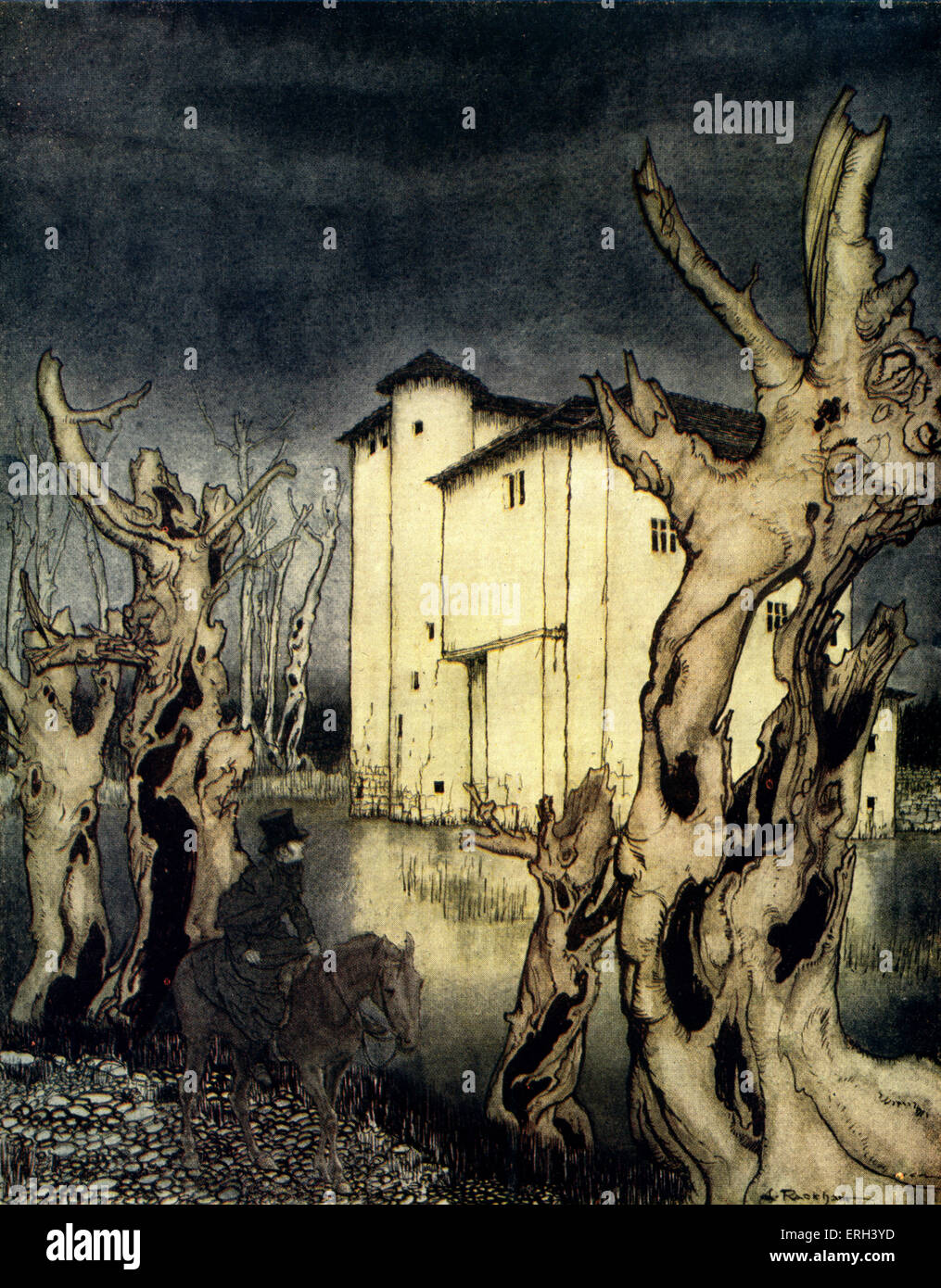
Shecries out and falls on her brother, and both die as she drags him to the floorwith her. The narrator flees the house with the storm still raging around him.He looks back to see the crack in the house widen and the tarn swallow theHouse of Usher. After looking at the reflection of the mansion in the tarn, or small lake,in front of the estate, the narrator believes he sees a heavy mist and vaporrising from the trees and house. He then takes a closer look at the ancientmansion and sees a crack zigzagging from the roof to the foundation, where itdisappears into the tarn’s shore.


No comments:
Post a Comment